23 September 2006
How To Write A Business Plan For Your Business
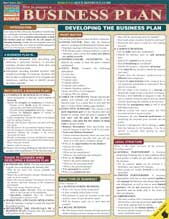
So you've reached that stage where you're ready to get your home business started in every way except one: you need money. Whether it comes from a loan or from investors doesn't really make too much difference, since there's one thing that they all need to see before they'll give you a cent. That thing is your business plan.
Think of your business plan as being like a list of answers to questions that people might have about your home business. You will not get outside funding without one, because the people giving you the funding want to know that you've thought through what you're doing. A business plan says to them 'I've considered this from every angle, and here's what I've come up with'.
What is Your Service? This is the first question every business plan should answer. Just what is it that you plan to do? Tell them which industry you're going to be in, and why you've chosen it.
Who are Your Customers? Once you know what you do, the next thing you need to know is who you're going to be doing it for, and so that's the next thing that should be written on the business plan. You should also include your area here.
What Makes You Different? You need to say what the 'key factors' are that make your business different to other businesses in its sector. What is it that you're planning to do to make the business succeed?
What are Your Expenses? Your start-up expenses include any equipment that you need before you can get up-and-running, while your day-to-day expenses are staff costs and supplies.
To finish it all off, you should include a breakdown of projected profit and loss per month for the first year of the business, in the form of a graph. You would work this out by working out a reasonable repayment of any one-off expenses and adding this repayment to the day-to-day expenses, before graphing day-to-day expenses against projected sales. Your business plan should show you making enough of a profit each month to live - if you doesn't, then it will be considered unfeasible by anyone you show it to.
The best way to figure out the dos and don'ts of business plans is to find real ones - they're out there on the Internet. Once you've seen a few, you can start to get some idea of how much work is going to be involved to write one of your own. Remember, until your business exists for real, the business plan is the only tool you have to show anyone how great it's going to be.
i got this from http://www.executivebusinessbooksummaries.com/
Top Five First Year Mistakes
 Even once you've got past the starting-up stage, there are still plenty mistakes to be made, and most of them are going to be made in your make-or-break year -- the first one. Here are the top five things to avoid.
Waiting for Customers to Come to You.
Too many people wait for their customers to phone, or come to the door, or whatever. They get one or two customers through luck, but nothing like enough to even begin paying their costs. These people sit around, looking at their competitors doing lots of business, and wonder what they're doing wrong.
You can't be like this. You have to go out there and actively try to find customers. Talk to people, call them, meet with them -- whatever you do, don't just sit there!
Spending Too Much on Advertising.
So everyon'e tells you that the only way to get ahead in business is to advertise. Well, that's true, but you need to make sure that you stick to inexpensive advertising methods when you're starting out. Spending hundreds of dollars for an a'd in the local newspaper might turn out to get you very few new customers, and you will have spent your entire advertising budget on it.
Make your money go further with leaflets, direct mail or email -- these are easily targetable campaign methods with high response rates and low costs. Remember that it is always better to spend money on an offer than on an a'd, and always better to spend money on an a'd than on a delivery method.
Being Too Nice.
When you're running your own business, it can be tempting to be everyon'e's frien'd, giving discounts at the drop of a hat and making sure that you don't hassle or inconvenience anyone. That's all well and good, until you find that your Good Samaritan act has just halved your profit margin without lowering the cost to the customer by very much at all.
Sometimes, you need to realise that you've got to be harsh to make a profit. Give people discounts to encourage them to bu'y or to come back, not because you like them or feel sorry for them. Don't be afraid to be ruthless in your pursuit of home business success. Nice guys don't finish last, but they are running in a different race -- one with much less prize money. If that doesn't bother you, of course, then feel FRE'E to go for it.
Not Using the Phone.
You'd be surprised just how common phone fears are -- if you're scared of the phone, you're not alone by any means. Many people are terrified of making phone calls, and avoid them wherever possible. I have seen more than one home business owner reduced to tears on the phone and trying desperately to hide it from the customer.
You need to try your best to overcome your fears, as talking to customers on the phone is almost as good as meeting them for real. Letters and emails are useless by comparison. The best way to overcome phone fears varies from person to person, but it can often be as simple as making the phone fun, by calling friends and relatives often for a while and getting used to it. Alternatively, try working in telemarketing for a while -- if that doesn't make normal phone use look like a walk in the park by comparison, then nothing will.
Hiring Professionals for Everything.
It can be tempting to think that, since you're starting out, you should just find a company or person to do every little thing you need. People seem to especially overspend on design services.
You might think it'd be great to have fancy graphics all over your website, but would it really increase sale's? If I saw it, it would put me right off. Likewise, a slick brochure often fails to say anything more than 'I'm going to charge you a premium to pay for my expensive brochures'. Don't hire someone unless you can demonstrate that the service they're going to provide will increase your profit's by more than the amount you're spending -- if you're not sure, try it yourself first, and you can always upgrade it later.
i refer from http://first-steps-online.com/
Even once you've got past the starting-up stage, there are still plenty mistakes to be made, and most of them are going to be made in your make-or-break year -- the first one. Here are the top five things to avoid.
Waiting for Customers to Come to You.
Too many people wait for their customers to phone, or come to the door, or whatever. They get one or two customers through luck, but nothing like enough to even begin paying their costs. These people sit around, looking at their competitors doing lots of business, and wonder what they're doing wrong.
You can't be like this. You have to go out there and actively try to find customers. Talk to people, call them, meet with them -- whatever you do, don't just sit there!
Spending Too Much on Advertising.
So everyon'e tells you that the only way to get ahead in business is to advertise. Well, that's true, but you need to make sure that you stick to inexpensive advertising methods when you're starting out. Spending hundreds of dollars for an a'd in the local newspaper might turn out to get you very few new customers, and you will have spent your entire advertising budget on it.
Make your money go further with leaflets, direct mail or email -- these are easily targetable campaign methods with high response rates and low costs. Remember that it is always better to spend money on an offer than on an a'd, and always better to spend money on an a'd than on a delivery method.
Being Too Nice.
When you're running your own business, it can be tempting to be everyon'e's frien'd, giving discounts at the drop of a hat and making sure that you don't hassle or inconvenience anyone. That's all well and good, until you find that your Good Samaritan act has just halved your profit margin without lowering the cost to the customer by very much at all.
Sometimes, you need to realise that you've got to be harsh to make a profit. Give people discounts to encourage them to bu'y or to come back, not because you like them or feel sorry for them. Don't be afraid to be ruthless in your pursuit of home business success. Nice guys don't finish last, but they are running in a different race -- one with much less prize money. If that doesn't bother you, of course, then feel FRE'E to go for it.
Not Using the Phone.
You'd be surprised just how common phone fears are -- if you're scared of the phone, you're not alone by any means. Many people are terrified of making phone calls, and avoid them wherever possible. I have seen more than one home business owner reduced to tears on the phone and trying desperately to hide it from the customer.
You need to try your best to overcome your fears, as talking to customers on the phone is almost as good as meeting them for real. Letters and emails are useless by comparison. The best way to overcome phone fears varies from person to person, but it can often be as simple as making the phone fun, by calling friends and relatives often for a while and getting used to it. Alternatively, try working in telemarketing for a while -- if that doesn't make normal phone use look like a walk in the park by comparison, then nothing will.
Hiring Professionals for Everything.
It can be tempting to think that, since you're starting out, you should just find a company or person to do every little thing you need. People seem to especially overspend on design services.
You might think it'd be great to have fancy graphics all over your website, but would it really increase sale's? If I saw it, it would put me right off. Likewise, a slick brochure often fails to say anything more than 'I'm going to charge you a premium to pay for my expensive brochures'. Don't hire someone unless you can demonstrate that the service they're going to provide will increase your profit's by more than the amount you're spending -- if you're not sure, try it yourself first, and you can always upgrade it later.
i refer from http://first-steps-online.com/
22 September 2006
7 Important Business Lessons
 Millions of people start new small businesses in the United States every day. Many fail at running a small business every day. What causes one business owner to succeed where another fails? There are seven key areas to focus your efforts for a successful small business. It starts with knowing oneself and ends with not being afraid to ask for help.
1.Know Yourself
Having your own business is more than just creating a job for yourself. To be a successful small business owner, there are many personal sacrifices you will be required to make. You have to be willing to make them. By knowing yourself and what is truly important to you, you will be able to make these choices far easier than if you have never considered your priorities.
Your basic roles in a small business are in marketing, planning, finance, and administration. To get the best results, it is rare for one person to play all these roles equally well. You must know which parts you can handle yourself and which parts you're going to need help with. That's why it's so important to be objective and take a close look at your overall strengths and weaknesses. Ask yourself the following questions:
Millions of people start new small businesses in the United States every day. Many fail at running a small business every day. What causes one business owner to succeed where another fails? There are seven key areas to focus your efforts for a successful small business. It starts with knowing oneself and ends with not being afraid to ask for help.
1.Know Yourself
Having your own business is more than just creating a job for yourself. To be a successful small business owner, there are many personal sacrifices you will be required to make. You have to be willing to make them. By knowing yourself and what is truly important to you, you will be able to make these choices far easier than if you have never considered your priorities.
Your basic roles in a small business are in marketing, planning, finance, and administration. To get the best results, it is rare for one person to play all these roles equally well. You must know which parts you can handle yourself and which parts you're going to need help with. That's why it's so important to be objective and take a close look at your overall strengths and weaknesses. Ask yourself the following questions:
- Do you plan before you take action?
- Are you willing to hustle for the sale?
- How financially savvy are you?
- Do you have a well thought out plan? And, do you work the plan?
- Do you know how to make sales happen?
- Can you ask for the sale?
2.Ask For Help When You Need It
When you’re young and unseasoned, you tend to think you can do anything. This is a recipe for disaster for the small businessperson. If you insist on doing everything yourself, you will work 16 hours a day and not do some things well.
Remember, getting results is what counts! With outside advice and assistance, your quest for a successful business can be accomplished faster and with far fewer bruises than doing it yourself. When I started my first online business, I even created by own website. In retrospect, this was a big mistake. It took me far longer to create my site than having a more experienced person do it. Start equating every second of your time with money. Your time isn’t free. While you are trying to do everything, what’s falling through the crack?
Don't be too proud to ask for help, we all need help sometimes. With the Internet, the small business owner has a wealth of experience available to them. Why not take advantage of the many resources, paid and otherwise, available to you? Join a small business forum, like the Small Business Forum (www.smallbusinessbrief.com/forum/) where you can exchange knowledge with other small business owners. Access the millions of online articles on every business subject you can think of at ezinearticles.com
Qualified sources are also available from your local government offices and other professional services. It is important to recognize -- what you don't know can end up costing you money and greatly reduce the chance of achieving your business goals.
With all that knowledge, you need a plan of action.
3.Action Planning
like to call it “action planning” rather than “planning”. Action is the only element which turns a plan into reality. Many people are great at planning but they suffer when it comes to follow-through. Successful small business owners are action oriented. But that action starts with a plan.
According to leading authorities, the main reason 80% of all new businesses fail within the first five years is not money, but the lack of planning. If you want to succeed, the trick is to know how to make right the decisions by implementing an effective business plan. Remember, if you fail to plan, you might as well plan to fail.
A business plan should include how you will finance the business, who will perform certain critical business functions, the license and permits required, accounting method, as well as what you know about your prospects and customers.
4.“Mind Meld” Your Customer
Just knowing your customer isn’t enough for long-term success in your small business. In Star Trek, the Vulcan race had the ability to perform a mind meld. At the time of the mind meld, they could see, think, and feel everything their partner was seeing, thinking, and feeling. This is how close you must come to understanding your customer. The closer you get, the more successful you will become.
Are you listing to your customers? Make it your business to give your customers what they want and they will buy from you. They are the reason you are in business, and your future depends on them. The products and services you provide should be a direct reflection of their needs. Think in your customers' terms; buy, show, sell, and say things that interest them, not you. Don't forget, it is the customer that determines whether or not you succeed. They vote every day by where they spend their money.
Reflect on the following questions:
- Do you know the reasons why customers shop at your store? (service, convenience, price) If not, ask!
- Do you seek suggestions from your customers on ways you can boost business?
- Do you use a store or online questionnaire to aid you in determining your customers' needs?
- Do you stay in contact with customers on a regular basis?
- Do you ever try to re-establish a relationship with lost or inactive customers?
- A key to success lies in knowing your customer. The other half of the equation is to know your industry.
5.Know Your Industry
You can gain the greatest competitive edge if you intimately understand your industry. You must know the ins and outs of your particular products and industry. You should know every competitor as well as their strengths and weaknesses. It’s in your competitor’s weaknesses where you will most frequently find your own success.
Your competitors size, services, location, marketing approach, type of customers, suppliers, and pricing strategies should be as well known to you as your own. Your local business climate, median household income, level of education, ethnic population, and the other demographics of your potential customers should be second nature to you. To prosper, you must know the game and the playing field intimately.
Many people focus upon these areas but still fail. Why? They focus more upon the product than the finances of the business.
6.Maintain Good Financial Records
Maintain Good Financial Records
If you don't know where your money is going, it will soon be gone. The "game of business" is played with products and customers, but the score is kept in dollars and cents. Good financial records are like the instrument panel on your car, they keep you posted of your speed, fuel level and engine condition. Without them you're flying blind trying to pace the other cars. If you know how much you're spending, buying and selling, you can take control and help your business make more money.
- Do you have basic accounting knowledge? Or, do you have someone you trust to keep the books?
- Do you maintain every receipt you obtain through the running of your business?
- Have you computerized your business to streamline everyday tasks and businessprocedures?
- Do you use sales forecasts, expense sheets, and financial statements on regular basis to assess the progress or your business?
- Do you evaluate your operating expenses and make necessary changes on a regular basis?
Many people erroneously believe good record keeping is for the government and those financial obligations. They are wrong! Good financial record keeping can help your business succeed. Use the financial information available to make improvements to the operation of the business and improve profits. Remember through it all, the old adage “cash is king” is true.
7.Manage Your Cash
It doesn't matter how unique your store is, your business can't survive without good cash flow. Cash is the lifeblood of your business. The money coming into or out of your store is the vital component that keeps your business financially healthy. For profitability, more cash must come into the business every day than goes out of the business. You can have the greatest sales in the world, but if it’s all in receivables, how will you pay your bills?
A monthly Cash Flow Statement is a critical business tool. It shows the amount of money at the start of a period and how much cash was received during the period. It identifies the various sources of incoming cash and the reasons for outgoing cash. Budget wisely. Know the sources of your monthly income and expenses. Then, you won't have to worry about running out of money. And that is a good thing.
Like any game, the game of business has rules and tools. Those who excel at the game, play it better than their competitors. Keep focused upon these seven critical areas and you will succeed. Remember, Albert Einstein once defined “insanity” as doing the same thing over and over again and expecting a different result. Isn’t it time you changed the things you are doing so you can succeed? I think the time is now!
By Michele Schermerhorn calls herself a “Corporate Freedom Fighter” dedicated to freeing cubicle prisoners to experience their own successful online business. She has over 30 years experience in the business world and over 12 years running her own successful online businesses. She is President of Online Business Institute Inc. (http://www.obinstitute.com).
15 September 2006
Four Popular Modes Of Running A Home Business
Starting a home based business can be one of the most exciting AND scary times of our lives. The main problem isn’t really about how to start a home based business. It’s about making that conscious decision to actually take that first step! It can be difficult especially if you’re holding on to your full-time job for dear life! Breaking free of your comfort zone is critical, but once you get over that mental hurdle and you’ve decided to go ahead and start a home based business, there are basically four ways to do it. The Freelance Entrepreneur Freelancing is the easiest way to start a home based business, when having a steady income is crucial and leaving your job is not an option. It can be difficult though, if you have to juggle work, family and freelancing so you’ve got to stay focused on what your goal is. It helps if the whole family can get in on the act and work as a team. Freelancing is great because you get to play around with your time and your goals, adjusting them to suit your needs. When your job is secure, you might want to freelance as a way to supplement your income. However, if there are signs that you might lose your job, you can always pick up the pace and move from freelancing to running your business part-time or full-time. Freelancing greatly reduces the stress and anxiety a family goes through in the event of job or income loss. However, it’s also very easy to lose your momentum and passion when you freelance since you would probably have a loose working schedule. This is where self-discipline and perseverance comes in. The Part-time Money Maker Running part-time is ideal if you’re able to opt for a flexi working schedule to concentrate more on your home based business. There are obvious benefits to this because most home based businesses require you to operate during office hours. Remember that this sort or working arrangement may mean you will earn less for a while as you build your home business. When we first started our home catering business, my wife worked mornings as a kindergarten teacher while I was employed full-time. In the evenings, we would both work on our home catering business. In fact, we’re still doing it this way. My wife still teaches while I now work at home as a Netpreneur in the mornings. We’re adapting our working arrangements to suit our needs. The Full-time Home Business Owner Many people try to start a full-time business after they’ve been laid off or they’ve had it up to their eyeballs with their job. In their desperation, they’re easy prey for online and home based business scams. If you ever find yourself in such a situation, DON’T throw your money into a home based or online business hoping for immediate returns – chances are you WILL regret it. The exception to this rule would be if you’ve been freelancing or working part-time on that business for some time and you’re ready to take it to the next level. When you do go into your business full-time, make sure you’ve got at least a year (two is better) of backup funds ready. You should have a cut-off date when you MUST decide that you will need to go back to full-time employment in the event your home business doesn’t go the way you plan - that’s reality. The Online Netpreneur Starting and online business deserves to be in a category of its own simple because you can freelance, do it part-time, three-quarter time, full-time, anywhere, anyway you choose. However, running an online business is not as easy as many ads on the internet would like you to believe. It can take considerable time and effort before you see any substantial income coming from your online business. Here's a short list of the types of online businesses you could set up : *Sell your own physical product. This is probably the most difficult to get off the ground. Unless you already have an established customer base and your online presence is there to add value to your business, it could take years to build such an online business, but having an online store brings you business from all over the world, something a small physical store can't possibly do. *Sell your own electronic products. Being an Infopreneur (Information Entrepreneur) is really easy these days. There are millions of people promoting their e-books, software and training programs online. You don't have to be an Internet genius to sell your stuff online. All you need is to be knowledgeable in a specific niche and build your products around that niche. There is BIG money to be made in this! *Sell an online service. People will pay a subscription fee to be allowed into the subscribers section of your website to use these services. The types of services you could offer are limited only by your imagination and technical know-how. *Sell other people's products. This is called affiliate marketing. It's the most popular because you don't incur development costs. There are literally millions of products to choose from, and the beauty of this online business is that you can sell to anyone, anywhere in the world – there are NO borders! *Selling advertisement space on your website. This has always been a good money maker. The catch is that you need to build your website to such a level where it brings in substantial traffic. This in turn brings in advertisers who are willing to pay you to display their ads on your website. Better earlier than later My personal opinion is that there’s no better time to start a home based business than when your job is secure and you’re financially stable. Think of it as an insurance policy. You’re investing in a backup plan that you may need sooner than you think. The statistics are alarming. One report suggests eighty five percent of the global workforce will experience the loss of their job at least once in their career. What better way to escape this than to build your own home based business where YOU are the boss and you will never get fired! Here’s to your financial and family well-being. Cheers! By Andrew Shim
Business Structure Options
Business structure planning entails analyzing the different business entity options and choosing the one that is right for you. There is no magic formula for business structures. Your set of reasons for choosing one business structure over another is as unique as your company. There is, however, one universal rule for deciding on a business structure: Consult a Professional. You certainly need to familiarize yourself with the basic types of business structures available but don't think you can make the final decision. If your clients read up on Microsoft Small Business would they be able to install their small business server? No. The same goes for you and your limited knowledge of business structures. Business Structure Options:
- Sole Proprietorship - one owner with no segregation between business and personal liability
- Partnership - two or more people with ownership in the company
- Corporation - business is a separate legal entity from the owner, 3 types: S Corp, C Corp, or LLC
The most popular business structure is the corporation. There can be liability advantages but the main appeal is the prestige and credibility it seems to bring in the market place. Regardless, the business structure you choose has to make sense for your situation. Your accountant will be able to go through this with you.
Your accountant will analyze the business structures from both an operational and tax perspective. The tax laws are so complex and confusing that you really need to have an expert in that area provide you with guidance and direction. Do not cut corners here. Hire the best accountant or attorney you can.
The Bottom Line on Business Structure
The business structure you choose is a huge decision that affects both your personal finances and your business operations for years to come. Don't mess around and don't be cheap. When it comes to deciding which business structure you should use, you need to get professional advice. Consult an accountant or attorney who specializes in small business finance and tax laws. The money invested now will save a lot of frustration later.
By Joshua Feinberg, co-owner of Computer Consulting 101, gets computer consulting businesses more steady, high-paying consulting clients. Now you can too. Just sign-up now for your free access pass to these field-tested, proven computer consulting secrets at Computer Consulting 101.
7 Tips For Moving To Self Employment
What you must understand is that moving away from “traditional” employment entails changing your mentality. You need to make the transition from paycheck thinking and embrace profit thinking. This is perhaps may the hardest thing to do for those used to and brought up in a ‘safety’ mindset. Before you decide to start working for yourself, you must realize that a few months in the beginning can be very tough if you have not planned for the transition properly. Below are some of the painful aspects of moving to self-employment from employment and ways to cope with them. Moving From A Job Culture to Self Employment
1
You should have enough money to cover your expenses in the near future. Get into the habit of keeping a close eye on your accounts. Petty expenses can run from a few hundred to a few thousand dollars, and you will run into trouble if you don’t account for every penny.
2
Constantly keeping track of correspondence and communications, vendors and customers in addition to managing your business (which is your sole responsibility), can run you crazy. Add to this the frustration of weak sales and cash flow. The only way out, if you can’t afford an assistant, is to slog it out, burning the midnight oil and getting up early the next morning. You will have to repeat this for the next few months. This may be tough, but you need to know exactly how things will be going in, especially at the beginning.
3
Resisting the desire to accept each order takes great determination. You want to make as much money as possible, but you shouldn’t overextend yourself, or make a deal that will be detrimental to your business in the long run. Have the strength to scrutinize every deal that comes your way, then decide if it is actually worth taking.
4
Seeing your cash flow be unpredictable can unnerve you initially. Try to keep your cool and don’t panic. Before you start your work at home business, you must have two things in place so you can ease the financial pressure. Number one: the lowest possible monthly bills; Number two: A viable contingency plan.
5
Legal matters and taxation are two areas for which you should hire an expert unless you are very experienced. These things often change without notice, and you will need professional representation.
6
You need to maintain separate accounts for personal and business transactions. Do not mix the two. If you do, you will make a mess of your finances. If you must borrow from your personal account, transfer the money instead of just spending it outright.
7
Protect yourself when it comes to business transactions. This is just common sense. It is harder to do when dealing with friends or family, but you must do it. If you have to, negotiate payment terms. But keep in mind that business is business and keep all transactions professional and make the terms clear. Set some limitations when dealing with your customers, whoever they are.
By Tony Jacowski-six Sigma Online ( http://www.sixsigmaonline.org/ )
14 September 2006
Starting Out A Business
The first thing you must consider when you start thinking about a home based or small business is whether it's legal. Modern Twist to Old Scams With the rise of the Internet and e-mail, getting a phony ad or message out to a vast audience is cheap and easy. Even though the old work-at-home scams have taken on a modern twist, the typical profile of victims who are most susceptible to these scams has changed very little. Work-at-home con artists have always preyed most heavily upon senior citizens, the disabled, mothers who want to stay at home with their children, people with low income and few job skills, and people who just want to get rich quick. Cyberspace is simply the newest arena that scam artists have entered to widen their hunt for more people to dupe. To avoid falling for work-at-home scams, both on- and off-line, look for the following warning signs:
- Overstated claims of product effectiveness;
- Exaggerated claims of potential earnings, profits, or part-time earnings
- Claims of "inside" information
- Requirements of money for instructions or products before telling you how the plan works
- Claims of "no experience necessary
- LOSE MONEY! Consumers have lost amounts ranging from $10 to $70,000, or more.
- WASTE VALUABLE TIME! You may throw away countless hours on worthless projects that cost you a lot of money to attempt and complete, but, in the end, give you nothing in return.
- RUIN YOUR REPUTATION! You can involuntarily sell your customers terrible quality merchandise or nonexistent products and services.
- BE A TARGET OF LEGAL ACTION! You can be held liable for perpetrating a fraud by deliberately or even unintentionally promoting and selling fraudulent products or services to others.
- Never offer you regular salaried employment.
- Promise you huge profits and big part-time earnings.
- Use personal testimonials but never identify the person so that you could check with them.
- Require money for instructions or merchandise before telling you how the plan operates.
- Assure you of guaranteed markets and a huge demand for your handiwork.
- Tell you that no experience is necessary.
- Take your money and give you little or nothing in return except heartbreak and grief.

